The emergence of state reserve activity in Kazakhstan began in 1922, when the Committee for the Protection of Turkestan Culture and Ancient Natural Monuments was established. On May 16, 1931, by special decree (№. 20, protocol 15) of the Central Executive Committee of Kazakhstan, the Almaty Reserve was established in the Small Almaty forest region. Initially, it covered an area of 12,848 hectares. The reserve’s territory also included the alpine meadow belt in the gorge of the Small Almaty River. On April 1, 1934, the All‑Russian Central Executive Committee and the Council of People’s Commissars approved the “Rules for Reserves” decree. Under this decree, the main objectives for organizing the Almaty Reserve were specified as follows:
1. To comprehensively preserve, scientifically study, and restore the natural and historic-natural conditions characteristic of the high mountainous regions of the Ile Alatau and Kungei Alatau.
2. To maintain normal water levels in the natural reserve area and adjacent territories.
3. To analyze the conditions preventing muddy–rocky floods and identify the developmental stages (processes) of such floods to anticipate and prevent them.
By decree of September 9, 1934 (№. 10 protocol) of the Kazakhstan Central Executive Committee, measures were taken to reorganize the natural reserve—expanding the boundaries of the Almaty Reserve and granting it the status of a state nature reserve.
On February 10, 1935, the All‑Russian Central Executive Committee and the Council of People’s Commissars adopted the decree “On Establishing a System of Reserves of National Importance.” This decree sanctioned the system of state reserves of national importance in our country. It also outlined measures for systematic, scientifically based conservation efforts. In that decree, it was specified that the Almaty State Nature Reserve would be expanded to approximately 400,000 hectares.
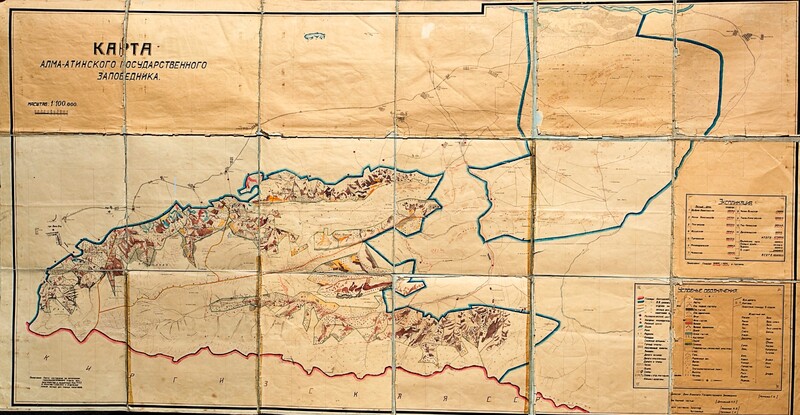
On December 9 of the same year, the reserve area was extended to include the adjacent Jalangash and Sógetí gorges. By 1941, the reserve spanned 856,600 hectares and encompassed five regions:
1. The Big and Small Almaty forest tracts along with the neighboring alpine belt. The administrative office was located in the Small Almaty Gorge—this housed Division 1.
2. The Talgar forest tract and its adjacent alpine belt. Division 2’s office was in the settlement of Talgar.
3. The Esik and Turgen forest tracts with their alpine belt, including the Karashengel forest region. Division 3’s office was in Turgen settlement.
4. The Shelek and Shelek‑Asy forest region, the Sogeti, Bugity, Jalangash gorges, and the left bank of the Ile River west of the Sharyn River. Division 4’s office was in Shelek settlement.
5. The Tabanqaragai, Taushelek, and Jalangash forest regions with adjacent alpine belt. Division 5’s office was in Jalangash settlement.
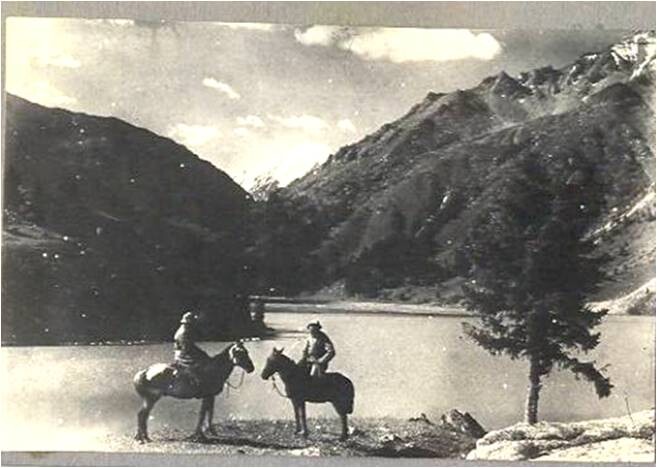
Each tract was managed by an individual manager and forester, along with senior and junior wardens. During patrols of each tract, horses were used as transport. The first motor vehicle began being used in 1936. The reserve’s staff comprised 65 legally employed personnel in the nature‑protection sector—10 senior wardens and 55 junior wardens. Each tract covered 10,000 hectares, with a total patrol area of 60,000 hectares.
Contemporary national parks such as Ile‑Alatau, Kolsay Lakes, Sharyn, and Altyn‑Emel, as well as the forest‑management areas of Kegen and Shelek, were later delineated from the territory of the Almaty Reserve. In other words, the Almaty Reserve is the “ancestral home” of those institutions.
Scientific work in the reserve began in 1936—prior to that, research was not systematically conducted within the reserve’s territory. The first scientific work in the reserve was initiated in 1934 by the distinguished academician Professor A. A. Bitrih, who began studying the biological characteristics of the reserve’s forests.
From 1938, a “geocamera” was established within the scientific department of the Almaty State Nature Reserve, which later became the foundation for the reserve’s nature museum. It began accumulating about 800 bird specimens, 300 mammal skins, butterfly collections, and more. The collection materials for the geocamera were delivered primarily by M. N. Korelov, a zoologist and scientific staff member of the scientific department. The nature museum began organizing excursions for visitors. However, due to a shortage of necessary rooms, the nature museum closed in 1940.
In 1936, raccoon‑dog‑like canids were first introduced into the reserve’s territory in the Bakhtiyar Gorge. In 1939, the Scientific Council of the Almaty Reserve held its first session, and in the same year, the first collection of scientific works was published, and for the first time a training course in the profession of nature‑monitor was organized within the reserve. K. P. Drachevskiy contributed greatly to the publication of the reserve’s first scientific works.
The notable scientist and famous naturalist‑writer Maxim Dmitrievich Zverev worked in the Almaty State Nature Reserve in the 1930s–1940s. During his tenure, the reserve’s territory expanded to nearly one million hectares. Research work accelerated: 17 highly educated researcher‑specialists (zoologists, botanists, soil scientists, hydrogeologists, etc.) and 5 laboratory assistants worked in the reserve. Scientific research was conducted via special expeditions organized from universities in Maukeu, Leningrad, Ukraine, and Siberia. Renowned scientists such as S. I. Ognev, P. I. Manteifel, N. V. Pavlov, I. V. Galuzo, B. K. Shtegman, A. G. Bannikov, and others worked on research projects. Each scientific expedition conducted research after concluding a preliminary agreement with the reserve’s scientific department, and a copy of the final research report was always forwarded to that department.
The hardship of the Great Patriotic War also affected the Almaty Reserve. Mowing and grazing livestock were permitted in the reserve area. According to a 1950 census, the reserve was home to about 2,000 argali, 3,000 ibexes, 8,000 roe deer, and around 150 deer. In September 1951, for various reasons, the Almaty Reserve was disbanded. The books and scientific works in the reserve’s library were distributed among various republican institutions. The accumulated zoological collections were transferred to the Zoological Institute of the USSR Academy of Sciences, and the herbaria to the Botanical Institute of the USSR Academy of Sciences. The dissolution and suspension of the reserve’s work significantly harmed the natural environment: the forests in the mountainous regions were ruthlessly deforested; the populations of wild animals drastically declined due to hunting; medicinal plant zones were heavily harvested; and an increase in fires occurred in the highlands due to irresponsible behavior by many visitors. Thus, the unprotected natural resources were mercilessly plundered.
A group of Kazakh scientists and public figures, considering the unique natural wealth of the Ile Alatau and the need to preserve it for future generations, raised the issue of restoring the Almaty Reserve. By special decree No. 524 of the Council of Ministers of the Kazakh SSR, the Almaty Reserve was re‑established on July 31, 1961. A territory of 128,000 hectares was allotted from the then Shelek and Kegen districts of Almaty Region. The reserve’s central office was located in the settlement of Shelek.
In 1964, by decree No. 40 of the Council of Ministers of the Kazakh SSR, the reserve was relocated to the new area within the basins of the rivers Esik and Talgar. In 1967, the central office of the Almaty Reserve was placed in the village of Akkü, located 2 km from Talgar city in Almaty Region. On November 5, 1967, the reserve’s nature museum was opened.
On January 12, 1966, by special decision №. 31‑r of the Council of Ministers of the Kazakh SSR, the “Aigay sand” mound—considered a unique natural monument of dead nature located on the left bank of the Ile River near the Kalqan settlement—was added to the Almaty State Nature Reserve as a subdivision. This subdivision was under the jurisdiction of the Kerbulak district of the then Taldykorgan region. It covered an area of 17,500 hectares. By decree No. 465 of the Council of Ministers of the Kazakh SSR, dated December 9, 1982, the Kalqan settlement with the “Aigay sand” natural monument was transferred to the Kapshagay Hunting‑Reserve Farm.
The main purpose of the reserve is the protection, preservation, and study of natural communities, flora, and fauna in the central part of the Northern Tien Shan Mountains, as well as investigation of natural development laws.
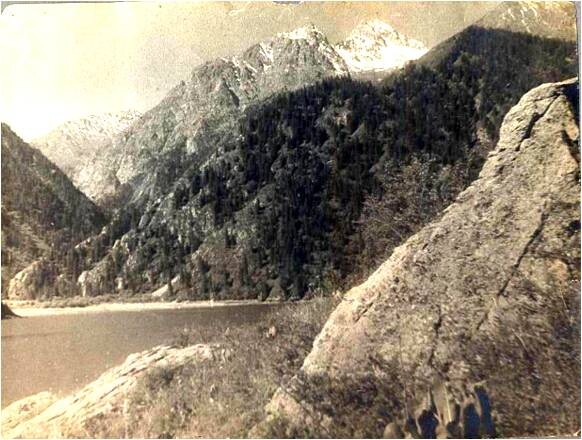
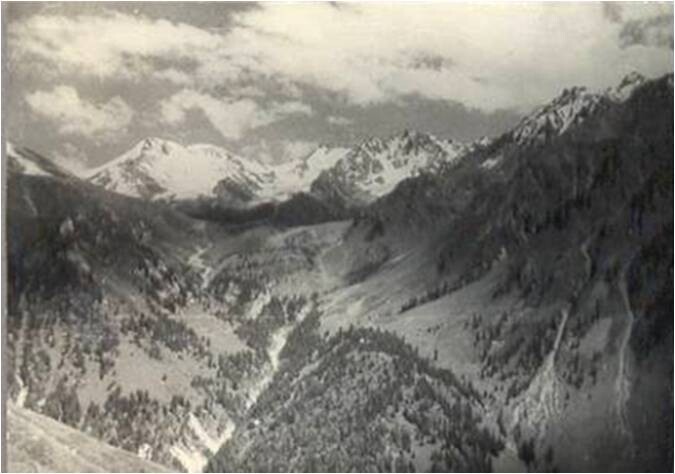
The area of the Almaty State Nature Reserve is located in the central part of the Northern Tien Shan, at altitudes ranging from 1,200 to 5,017 m above sea level, with a total area of 71,700 hectares, encompassing Talgar and Esik districts. The central office is situated in Talgar city, 25 km from Almaty. The reserve’s territory is under a unique protective regime. Among special protected areas, the reserve holds the highest category. Forest lands total 13,211 hectares, including 12,435 ha of forested land (14 ha of forest plantations), 776 ha of non-forested wooded land, 763 ha of sparsely treed land, and 13 ha of burned areas. All non‑forested lands amount to 58,489 ha, including 123 ha of water bodies, 10 ha of roads, 2 ha of settlements, 38,235 ha of other land, and 20,048 ha of glaciers. The reserve contains a total of 160 glaciers with a combined area of 233.7 km²; among them, in the Esik River basin—49 glaciers covering 53 km². The reserve is encircled to the east, west, and north by the territory of the Ile‑Alatau State National Natural Park, which surrounds it in a crescent shape; to the south, it borders the Kolsay Lakes State National Natural Park. The reserve is divided into two major sectors: the Talgar sector (40,094 ha) and the Esik sector (31,606 ha). The Talgar mountain range system forms the reserve’s main mountainous backbone. The highest peak in the reserve area is Talgar Peak (5,017 m). There are more than ten peaks above 4,500 m: Egizder (4,694 m), Aktau (4,686 m), Esiktenchoqy (4,685 m), Bely (4,677 m), Kopr (4,612.6 m), Metallurg (4,600 m), Bogatyr (4,576 m), Jusandy‑Kungei (4,565 m), Süleymen Stalskiy (4,514 m). The central part of the natural reserve is occupied by a glacial zone. The largest glaciers of the Northern Tien Shan are located within the reserve: Korzhenevskiy, Shokal’skiy, Bogatyr, Dmitriev, Konstitutsiya, Toguzak, Kalesnik, Metallurg, Ozyornyy, Sportivnyy, Kroshka, TEU, Grigoriev, Palgov, Kassin. River networks are well developed. Many gorges have abundant springs at their bottoms; the rivers flow with significant flood intensity, with lengths of 5–7 km and depths reaching up to 1 m. All rivers in the reserve originate from glaciers. The largest rivers are: Right, Middle, and Left Talgar, Esik, Zharsay, Tik, South Esik, Southeast Talgar, Zhangyrıq, Shelek, and Zhalgynqaragay. During summer, due to intense heat, all rivers have a high risk of debris flows. The most recent debris flow in the reserve occurred in July 2014. In the Esik River gorge, there are the lakes Esik, Bozköl, Akköl, and Muzköl, formed by natural landslide‑tectonic conditions. A distinctive natural creation in the reserve is the massive avalanche ice in the upper part of the Tik Valley in the Esik Gorge—one of the largest in the Northern Tien Shan. It measures approximately 3.5 km in length; it moves at a rate of several dozen centimeters per year and is notable as the lowest‑elevation active avalanche ice (2,400 m above sea level) in the region. Along the Middle Talgar River at an altitude of 1,850 m above sea level, there is a warm radon‑ and sodium‑rich spring. The protection and study of the unique and characteristic mountain landscapes of the Northern Tien Shan’s ecosystems is an important role in preserving its natural complexes. The reserve encompasses several altitudinal vegetation zones: mixed deciduous forest zone (up to 1,200–1,600 m), coniferous forest zone (approximately 1,600–2,800 m), subalpine zone (approximately 2,700–3,000 m), alpine zone (approximately 3,000–3,500 m), rocky scree and glacial‑nival zone (above 3,500 m).
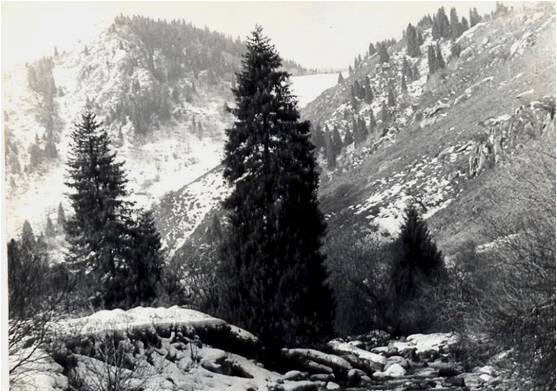
The richness of the Almaty Reserve underscores its crucial role in preserving the gene pool of rare and endangered plant and animal species. One of the main treasures of the reserve is the Tien Shan fir forests. These forests have played a crucial role for centuries in forming the ecosystems of the Ile Alatau mountain ridges, ensuring the normal life of plant and animal communities.
The reserve’s staff work tirelessly to preserve this unique nature for future generations. Thanks to their dedicated efforts, the Almaty Reserve has become one of the leading reserves in Kazakhstan.
The “Almaty State Nature Reserve” has been operating effectively in accordance with the Law of the Republic of Kazakhstan “On Specially Protected Natural Areas” dated July 7, 2006. Conservation of natural complexes and objects, as well as scientific research and environmental education activities, are being carried out in the Almaty Reserve. The success of these efforts largely depends on the qualifications and unity of the specialists. Therefore, complex issues of nature protection and reserve operations are discussed at the Scientific Council and at team meetings. The team was recognized by the Committee on Forestry and Wildlife of the Republic of Kazakhstan, receiving 1st place in 2011 and 2nd place in the national ranking in 2014. Additionally, for active advocacy in nature conservation, the team received a Letter of Gratitude during the “Parks Parade 2013” campaign. Among reserves in the country, they earned 1st place in the “Parks Parade 2024” international nature protection campaign. The team will continue working toward even higher achievements in the future. As one of the oldest and most unique reserves in the country, the Almaty Reserve has traversed a complex path of development.
On October 28, 2020, at the 32nd session of the Man and the Biosphere International Coordinating Council of the UNESCO programme, the Almaty State Nature Reserve was included in the UNESCO World Network of Biosphere Reserves, thanks to its unique topography, exquisite nature, and rich biodiversity.
 UNESCO/MAB
 Ministry of Ecology and Natural Resources of the Republic of Kazakhstan
 Committee for Forestry and Wildlife of the Ministry of Ecology and Natural Resources of the Republic of Kazakhstan