The Nature Museum, opened on November 5, 1967, operates in the Almaty State Nature Reserve. The total area of the museum is 120 square meters.
Museum Halls
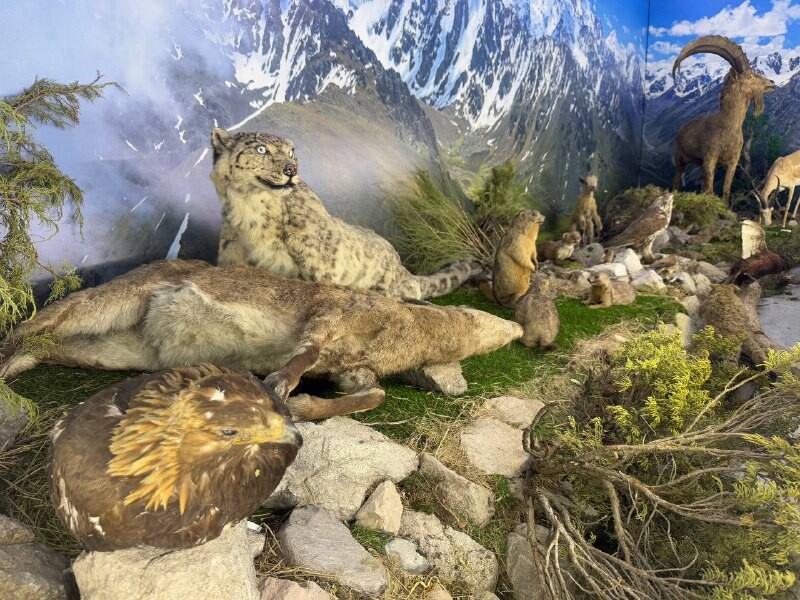
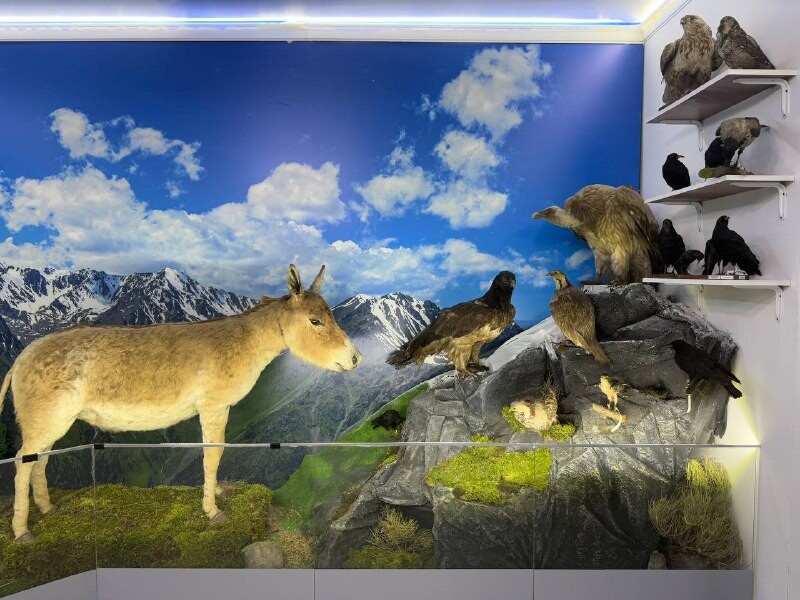
The first hall consists of two sections combined into two exhibitions — desert landscapes and mountain landscapes. Each exhibition presents the animal and plant life of the local biotopes. Special attention is given to species listed in the Red Book.
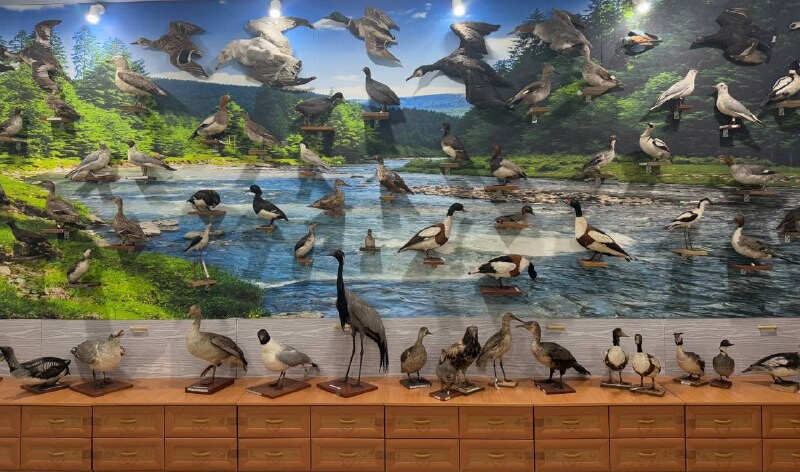
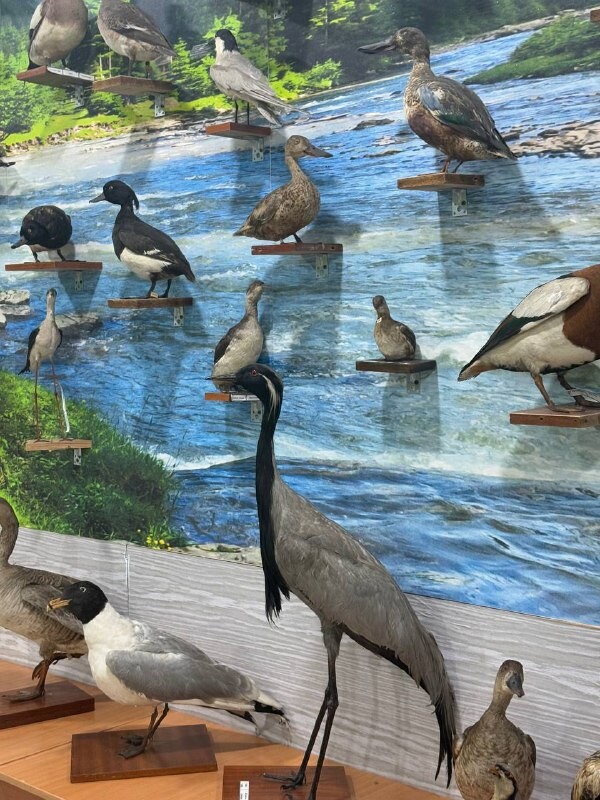
The second hall features the diorama “Wild Fruit Plants of the Almaty State Nature Reserve.” The walls display the exhibitions “Birds of Our Region” and “Plant World.” Scientific collections of insects, fungi, mosses, lichens, as well as bird and insect nests are displayed in glass showcases.
In the vestibule there are information stands showing the locations of nature reserves in Kazakhstan and a scheme of the Almaty State Nature Reserve. Three additional stands describe the main areas of the reserve’s activities — the protection service, scientific research, and environmental education and public awareness, among others.
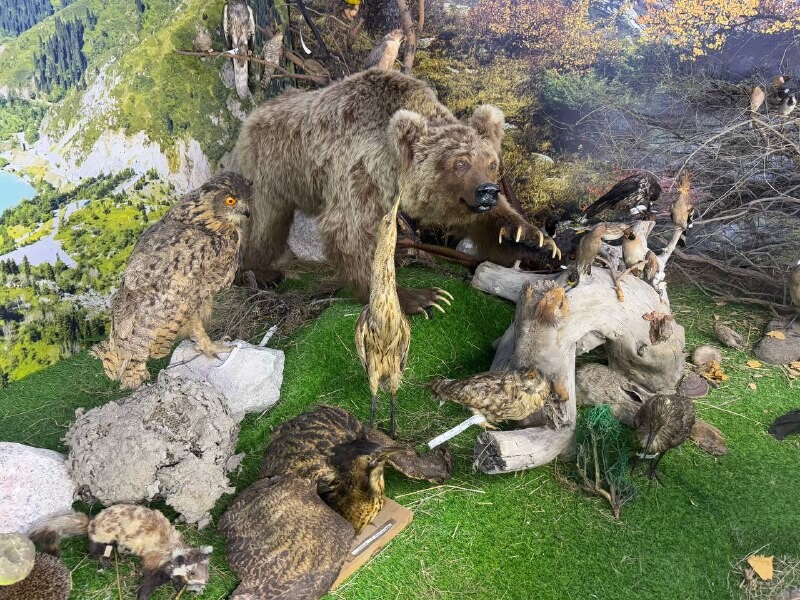
The museum contains more than 3,000 exhibits. The value of the museum lies in introducing visitors to the biological diversity of the local natural environment. Here visitors can see mountain inhabitants of the Zailiyskiy Alatau such as the snow leopard, bear, wolf, wild boar, roe deer, and mountain goats. Desert representatives are also displayed, including the saiga, kulan, and goitered gazelle.
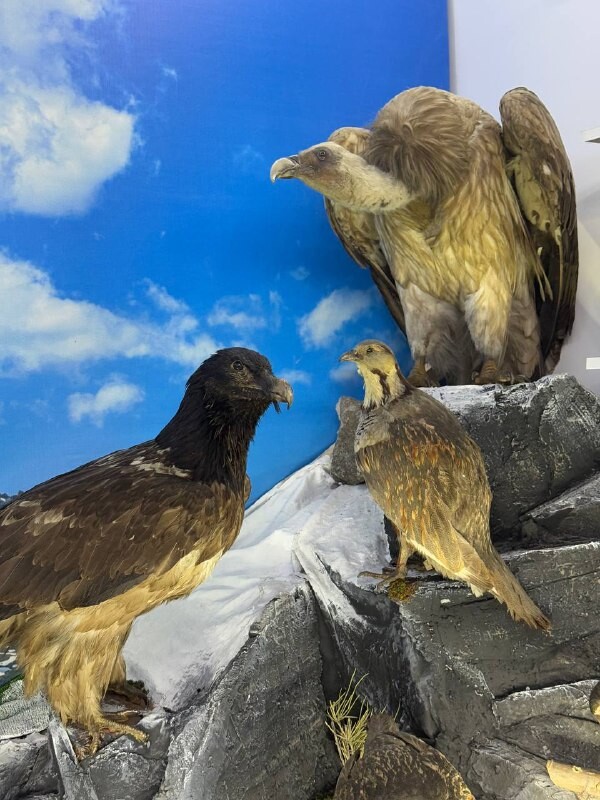
There are many bird species such as the golden eagle, steppe eagle, bearded vulture (lammergeier), griffon vulture, and eagle owl. The museum also presents tropical and local species of butterflies, beetles, and spiders, stands of rare, medicinal, and poisonous plants, more than 200 species of fungi, mosses, lichens, and nests of birds and insects.
Here visitors discover that the Almaty Region is unique in its biological diversity. Within a relatively small territory, almost all natural zones typical of the Northern Hemisphere can be found. Desert and semi-desert areas gradually change into steppes, which then transition into mountain deciduous, mixed, and coniferous forests.
The alpine meadows (zhailau) resemble tundra landscapes, while at elevations above 3,500 meters there is a zone of permanent ice and snow, similar to the Arctic. During the экскурсия, visitors gain an understanding of the flora and fauna of the entire region — from sandy desert plains to high mountain rocks and glaciers.
Museum Visitors
More than 95% of the museum’s visitors are school pupils, college students, and university students. Every year the Nature Museum hosts around 300 lecture-excursions, attended by approximately 4,000 people. Lectures and discussions held at the museum cover topics such as the current state of the region’s flora and fauna, environmental protection issues, and thematic lessons based on school curricula. With the help of the staff from the Environmental Education Department, schoolchildren learn to treat every flower, beetle, and butterfly with care and begin to understand the fragility of the natural beauty surrounding them.
Museum Activities
After visiting the museum, excursion participants receive essential theoretical knowledge, which they later reinforce during excursions along the ecological trails. Educational and excursion activities are carried out through the organization of scientific, educational, and ecological tours, as well as through educational, promotional, exhibition, museum, and cultural outreach work related to nature conservation and protected area management. Each year the Environmental Education Department organizes large-scale environmental events, seminars, summer eco-camps, and scientific educational ecological excursions both in the Nature Museum and along the ecological trails of the reserve.
Museum Opening Hours
The museum is open from 09:00 to 17:00.
On weekends visits are available by prior request.
Admission Fees
- Adults – 250 KZT
- Students – 200 KZT
- Schoolchildren – 100 KZT
 UNESCO/MAB
 Ministry of Ecology and Natural Resources of the Republic of Kazakhstan
 Committee for Forestry and Wildlife of the Ministry of Ecology and Natural Resources of the Republic of Kazakhstan